Општо

Општо

Youth-led Community Development training was held in Baku / Azerbaijan

“Youth-led Community Development” Training Course was held in Baku / Azerbaijan on 09-17 September 2019. Gələcəyə Körpü|Bridge to the Future organized 7-days long training course as a part of “Youth Resource Centre for Employability, Entrepreneurship Education and Community Development (YRC)” Youth Capacity Building project. YRC focuses on competence development of the youth workers that will be carrying the activities at the local level in their communities for employability, entrepreneurship education and community development. Training course aimed to empower participants and equip them with competencies to take an active role in community development and to make better use of existing learning opportunities for increasing their employability. Training included international exchange of good practices, training through non-formal education methods and supported participants to develop new initiatives that will be implemented at the local level.

Општо

Training for youth – workers in Czech Republic

In the period from July 16th to July 25th, training for youth workers will be held in Olomuc, Czech Republic. The training will focus on the employment program and is intended for all those who work or want to work with young people and would like to acquire skills that will help them in the employment process. For more information about the training click on the following link. All interested users should fill out the online application by April 15, 2019. For additional information you can contact us at our contact phone: 078 / 201-854 or on our e-mail address: info@cefe.mk.  

Општо

Partners Meeting in Potenza, Italy

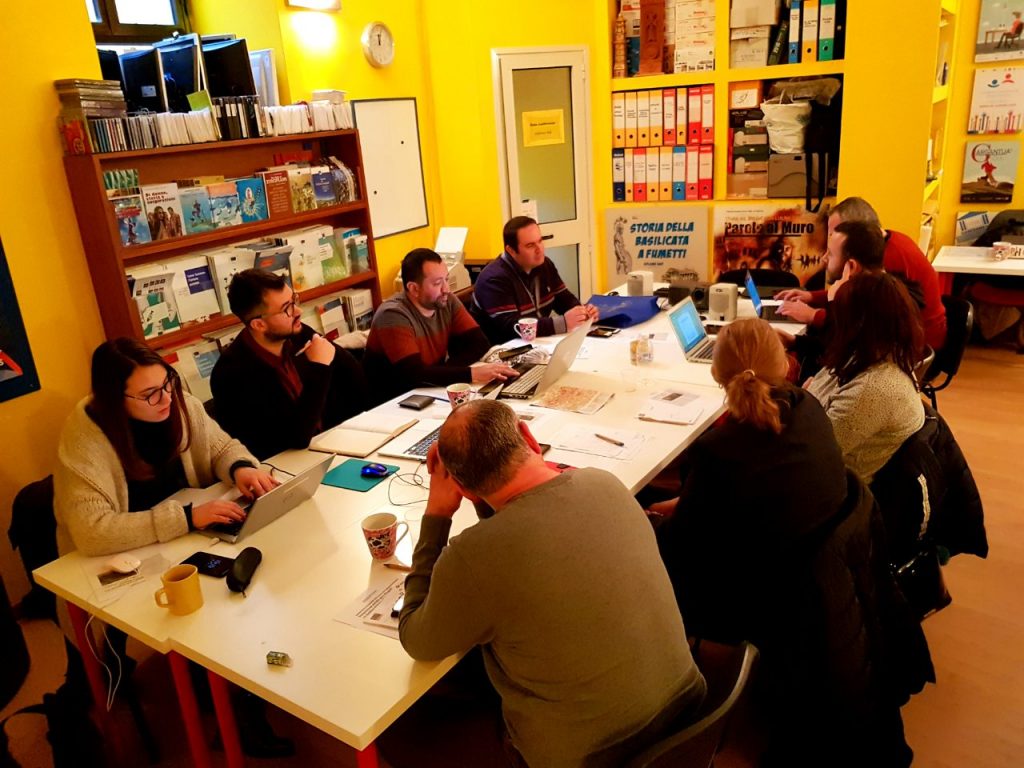
On 11th  and 12th of January 2019, in Potenza, Italy, CEFE Macdonia participated in the second international meeting, together with the project partners GEGED from Turkey, AEDDP from Greece, EURO NET from Italy and BASD from Bulgaria,  which was held in the framework of the Experiential Pedagogy of the Oppressed for Adults. This project aims to develop the skills of the migrants and help them in their social integration by developing their competencies and by teaching them how to avoid or overcome conflicts by improving living conditions, literacy, access to public services, ICT and language skills and by encouraging the intercultural learning and physical and social development; through the development of training activities and the creation of various intellectual products, including research on their needs and a handbook which will be used by the trainers and the experts who are going to work with this target group. At this moment, we are working on the final development of a free manual containing concrete methodologies and working practices for those working in the sector, which will be tested in 2 training courses, one in Turkey ( held in November 2018) and another in Macedonia (which will be conducted in July 2019). This manual is produced in English and in all languages ​​of the partnership (Turkish, Italian, Greek, Bulgarian and Macedonian) and will be distributed free of charge to all interested parties in order to serve as an operational tool-kit.

Општо

Two days of international networking in Tirana, Albania

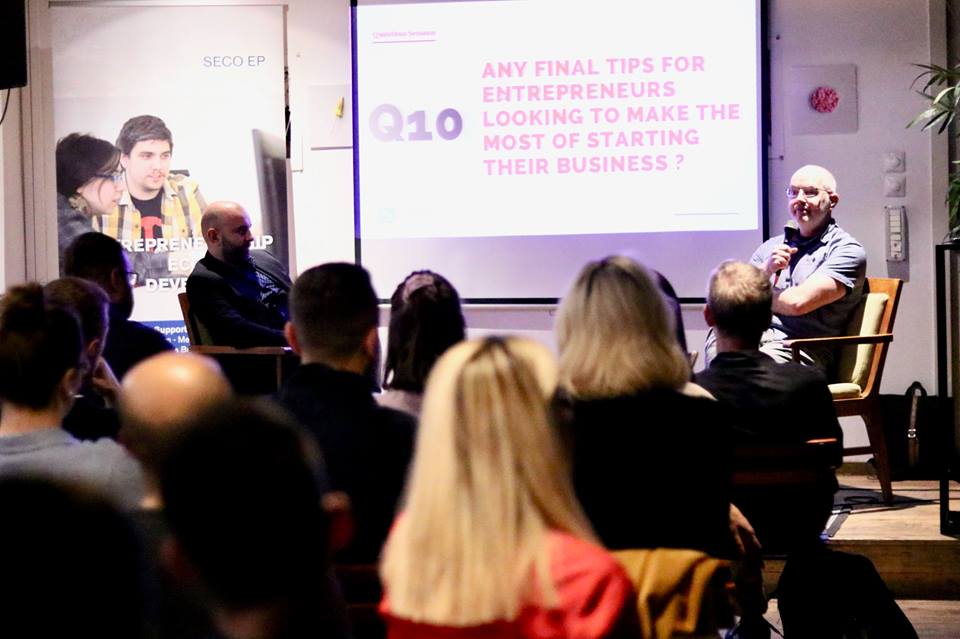
On the 2nd and 3rd of November 2018, part of our CEFE team was visiting lovely Tirana on a networking mission and we had really amazing time.  We attended the most inspiring event ever! – “How To Fundraise For a Pre-Seed Round Open Talk” organized by SWISS EP Albania and hosted by InnoSpace, with Keith Ippel as a speaker guest. He talked pretty honestly about startups, investors and gave tips for actually getting the money you need for your business. It was a remarkable experience to listen to Keith, speaking from his long experience in this filed and left us really inspired and motivated. We also had the chance to meet a lot of young people with great ideas and startup companies, entrepreneurs from Tirana, hang out with CEFE International members and enjoy delicious Albanian wine.            On 3rd of November, we took part in the IDEA – Award Ceremony organized by CEFE International, GIZ-ProSEED and AIDa, an event dedicated to startups and business ideas. It was opened by the Deputy Minister of the ministry of finance and economy, Mrs. Albana Shkurta and Mrs. Maren Kneller, representative of the German Embassy, responsible for co-operation and development. In the IDEA Challenge Business Plan Competition project participants took part with their business ideas and presented it to the jury after 2 months preparation of training and mentoring. On the ceremony, 5 best ideas were selected and they received grant from 7000 euros, and also new CEFE trainers from Albania were inaugurated. We wish them all the best and we look forward for international collaboration.                          The last day we took the chance to explore Tirana, with all the historical, urban and artistic parts of it, enjoy Albanian food and we highly recommend it!

Општо

Experiental Learning of the Oppressed for Adults

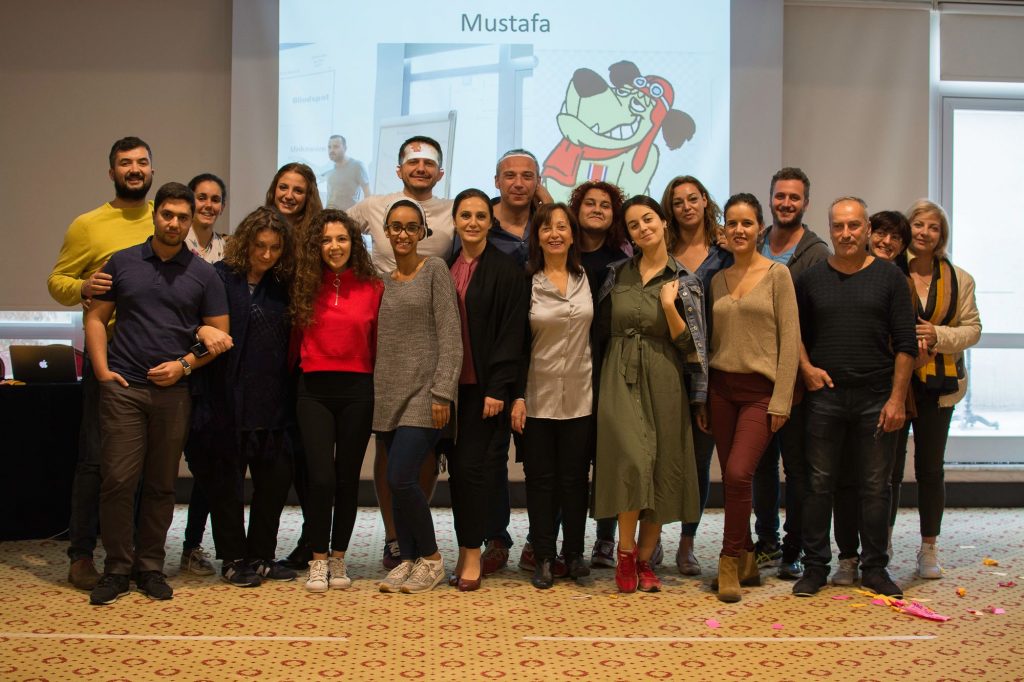
In the frames of the project “Experiential Learning for the Oppressed for Adults”, from 15.10 to 21.10.2018 in Istanbul, Turkey, training for trainers was held, where CEFE Macedonia participated with the partner organizations from Turkey, Italy, Bulgaria and Greece. The goal of the training, which lasted 44 hours, was to qualify the participants to deliver experiential adult training with a focus on refugees. Each thematic section was combined with exercises, in order to further, participants could use these techniques in their daily work. The team of trainers consisted of Mustafa Erdogan from Turkey and Jovan Stalevski from Macedonia, who trained a total of 19 participants, three of them from Macedonia – Stojna Atanasovska Dimishkovska, Biserka Shemovska and Hristina Hristova. In the following period, there are activities for preparation of a manual that would assist trainers in working with the refugees.

Општо

Experiential Pedagogy of the Oppressed for Adults

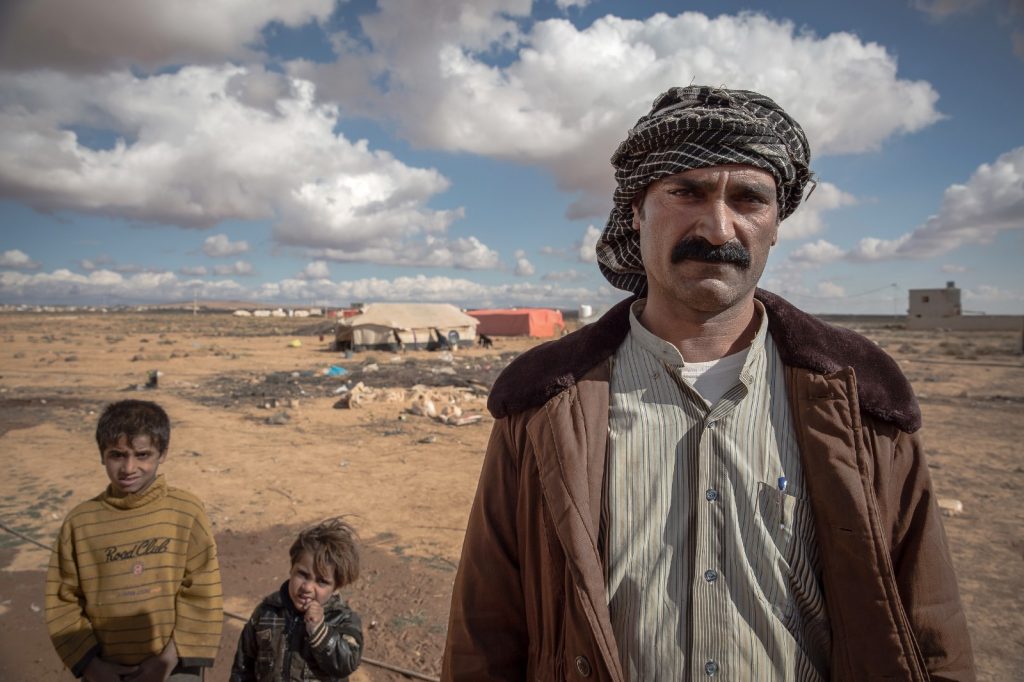
Project name: Experiential Pedagogy of the Oppressed for Adults Program: Erasmus + KA2: Strategic partnerships Implementer: GEGET, Turkey Partners: CEFE-Macedonia in cooperation with 4 partner organizations from Bulgaria, Italy, Greece and Turkey. Time frame: December 2017 – December 2019 Description of the Project: Millions of people are forced to leave their homes and seek shelter from conflict, violence, persecution or natural disasters in their countries. The majority of today’s refugees live in developing countries, which means they are fleeing countries that are struggling with poverty and hard work in their own society. The flow of migration affects transit countries, such as Turkey, Greece, Macedonia and Italy. Turkey is the country hosting the most refugees in the world, with more than 3 million refugees. The EU and Turkey provide shelter, food, hygiene, pleasant children’s spaces, assistance to reunite the refugee family through government organizations. They are also provided with education, but their social integration usually depends on the availability of assistance provided by local NGOs and international organizations. From this perspective, due to the level of capacity of non-governmental organizations, there is a lack of coordination, quality, equipment, tools and methodologies for providing education especially for adult refugees. The innovative part of this project is a methodological approach for adult education. In principle, it is a combination of two important theories: “Theory of Experiential Learning” by David A. Kolb and “Pedagogy of the Oppressed” by Paolo Freire. David A. Kolb – American scientist – who develops a cycle of experiential learning that is recognized by global institutions such as UNESCO, the European Commission and the Council of Europe, claims that people learn from their experiences. Kolb’s experiential learning theory consists of a four-phase learning cycle: experiencing, reflecting, thinking, and acting. Experiential learning is a methodology that includes learning games and simulative games where participants develop their sense of empathy by experiencing an emotional process through the game. The other theory on which our project is based is the “Pedagogy of the Oppressed” that generates a methodology for localizing experiential learning tools. Paolo Freire, a Brazilian educator and philosopher, is best known for his most important work, “The Pedagogy of the Oppressed”, which is considered one of the basic texts of the critical pedagogical movement. According to Fréire, the educational program should take into account the realities and background of the people. Educators should start a dialogue with the participants in order to discover the real world of the participants involved in the education itself, to see their understandings, values ​​and real problems. The project will develop the capacities of non-governmental organizations, and this will be achieved by training adults. Trainers will not only develop experiential learning, a methodology for key competencies for adult refugees, but that will be done by adult refugees who will be involved in the whole process. Participation will be the main methodology of the project itself. The project has a special added value in the field of European non-formal education, as it combines the methodology of experiential learning and the pedagogy of the oppressed groups. This innovative activity will create a new methodology for localizing the tools for experiential learning, and at the same time it will use them for the education and integration of refugees. Expected Results: Creating a new methodological approach “The Experiential Pedagogy of the Oppressed”, a combination of David A.’s “Experiential Learning Theory” Kolb and “Pedagogy of the Oppressed” by Paulo Freire, which will be created for the needs of adult refugees. 40 Adult educators who will participate in the training and learning activities will gain new skills in the field of adult education so that they can work more effectively with adult refugees. A set of tools will be created and published, which can be used by partners, as well as all other associations working with this or similar issues. A handbook will be developed that will be submitted to dozens of NGOs in each of the partner countries. In the local implementation of the project, 4 training teams from each partner organization will apply the new skills to a group of 15 adult participants, which means 300 adults in total in 5 countries. There will be 5 conferences on which 270 people in the field of adult education will be notified of the project and its results and will try the tools of the “Tools Fair”.