Општо

Општо

SURVEY: Impact of the newly occurred Corona – crisis on the businesses in Macedonia

The rapid spread of the COVID 19 virus has put the world economy at a standstill.  The uncertainty factor that threatens the economy and the capacity of decision-makers to respond to the shock of the pandemic in a timely and effective manner is significant. That is why the projections for the potential impacts of the COVID-19 shock on the global economy are crucial. CEFE Macedonia in cooperation with the Faculty of Economics at the Goce Delchev University, Stip, at the initiative of CEFE International conducted a survey on the impact of the corona crisis on business in Macedonia. The data were collected in the period from April 28 to May 2, 2020, and more than 50 companies from different economic sectors from our country participated in the survey. Does the Macedonian economy have major consequences from the corona – crisis? Most of the data from this survey showed that the business sector in Macedonia has consequences from this crisis, mostly in terms of productivity, sales, and revenue. See all the data from this research at the following link.  

Општо

Harmonizing the project activities during Covid-19 pandemic

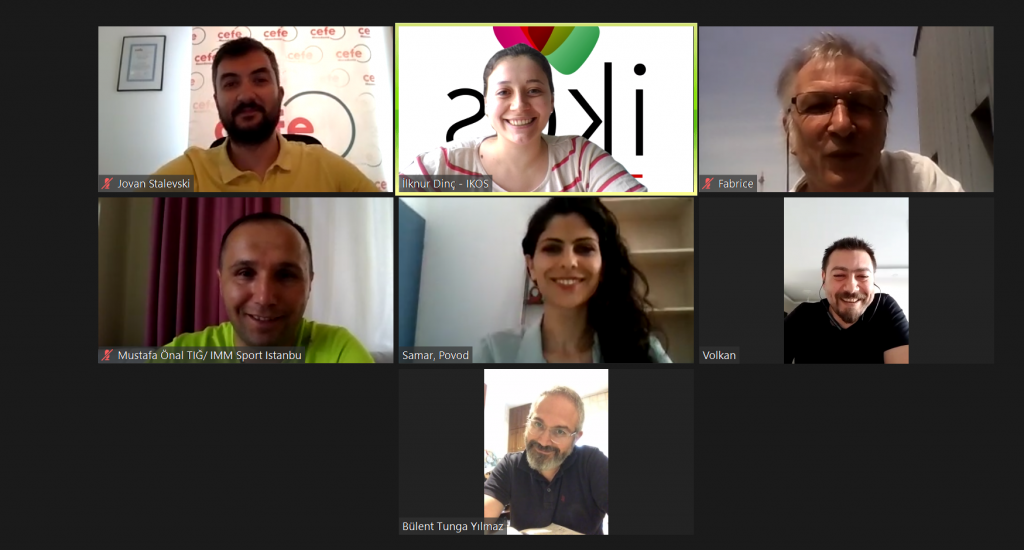
Representatives of the partner organization in the scope of Erasmus+ KA2 Strategic Partnership in the field of Adult Education `Sustainable Development Through Sport” project held an online meeting to harmonize the activities and vision of the project according to the situation with the pandemic and still maximize the impact of the project results. The online meeting was hosted by the coordinator organization IKOS – Turkey, with the participation of organizations: Sport of Istanbul Metropolitan Municipality, CEFE Macedonia, POVOD – Slovenia, and Intercultura – France. Partners remain committed to the overall aim of the project – to develop the key competencies and raise the knowledge of UN Sustainable Development Goals of adult educators/trainers and creating inclusive channels for women in NEET to empower our societies through using sports at local and international level. In the following short-term period, this strategic partnership in the field of adult education will be working on specific objectives: To held round tables, surveys, and meetings with stakeholders, to find out / analyze the challenges that led to the exclusion of women in NEET in partner countries. To engage sports leaders, trainers, and experts to increase the knowledge of adult educators/trainers within the context of the relationship between “Key Competencies of Erasmus + Program and the Importance of Lifelong Learning” and UN Sustainable Development Goals. Actually to produce a Manual for Adult Educators “Tool Development Through Sport”. To organize a training course for adult educators that will be held in October 2020 in France. After the meeting of partners in Macedonia, in September 2020, the partnership will move forward with the other specific objectives: To increase the usage of various sports tools in the field of adult education. To increase the competence of Adult Educators / Trainers in thematic subjects such as Innovation and Entrepreneurship, Social, Cultural and Active Citizenship, Learning to Learn. To create inclusive platforms led by and for Women to combat gender-based exclusion to achieve “Self-Expression, Social and Civic Participation, and Individual Learning Processes by creating sports opportunities. We invite all interested parties who are dealing with the sport as a tool for education to achieve sustainable development through gender justice, and those who are combating gender-based exclusion that hinders women in NEET from empowering our societies, to contact us at info@cefe.mk for making this project impact greater.

Општо

How CEFE Changes Businesses Performance, Employment, Income And Livelihood

CEFE training is a broad term, used for different objectives, duration and target groups. The common denominator is the promotion of entrepreneurial competencies by using highly participative methods. CEFE modules are usually developed by actors around the globe. CEFE, since its creation has demonstrated to have an extraordinary impact in businesses performance, employment generation and in the life of their participants. Here some findings: In 1994, the Federal Ministry of Economic Cooperation and Development (BMZ) developed the first global evaluation of CEFE Method and they identified that, on average, 4.5 jobs per participant were created after CEFE training. In 2003, members of CEFE Network in Vietnam held an impact study of the methodology. The data demostrated that, on average, 20 jobs per start-up were created after CEFE training. In 2012, master trainers from Rwanda realized that after a CEFE training, 1043 people decided to start-up, generating the creation of 931 additional jobs. In 2019, with the support of the network of Cefistas, we developed the Global Impact Study in order to assess CEFE impact on young people in rural areas as well as to make findings on the effectiveness, replicability and adaptability of CEFE for the design and implementation of future programmes. The study is based on a global survey with a sample of 459 respondents from 15 countries who all attended a CEFE training, on average 2 years ago. For extrapolation we used the Global CEFE Compass and a data bank which help us to monitor the number of Training of Trainers CEFE, courses and participants. The results of the study show that CEFE is an effective method of promoting self-employment, business start-ups, job creation, business and income growth. In addition, its effects are largely independent of local, cultural, social or political contexts. CEFE IMPACT RESULTS EMPLOYMENT GENERATION: CEFE contributed to the reduction of unemployment rate from 40.5% before CEFE training to 8.7% after CEFE training. Additionally, CEFE also contributed to the creation of additional jobs. BUSINESS CREATION: CEFE training programs fostered the creation of businesses. 44.9% of our participants started their own business after CEFE training. BUSINESS GROWTH: CEFE has a growth impact for start-ups and existing businesses at the same time (in terms of additional jobs created and size and income growth). SUPPORT TO LIVELIHOOD TO OTHERS: A person’s livelihood refers to their ¨means of securing the basic necessities of life¨, like water, food, medicine, shelter and clothing. For CEFE participants, support to family and friends is a central social value and key factor for livelihood. CEFE, in 30 years of experience, contributed to increase the livelihood of 42.5 Million people around the world.

Општо

“National Seminar about Adult Education for Experiential Learning and Tool Fair”

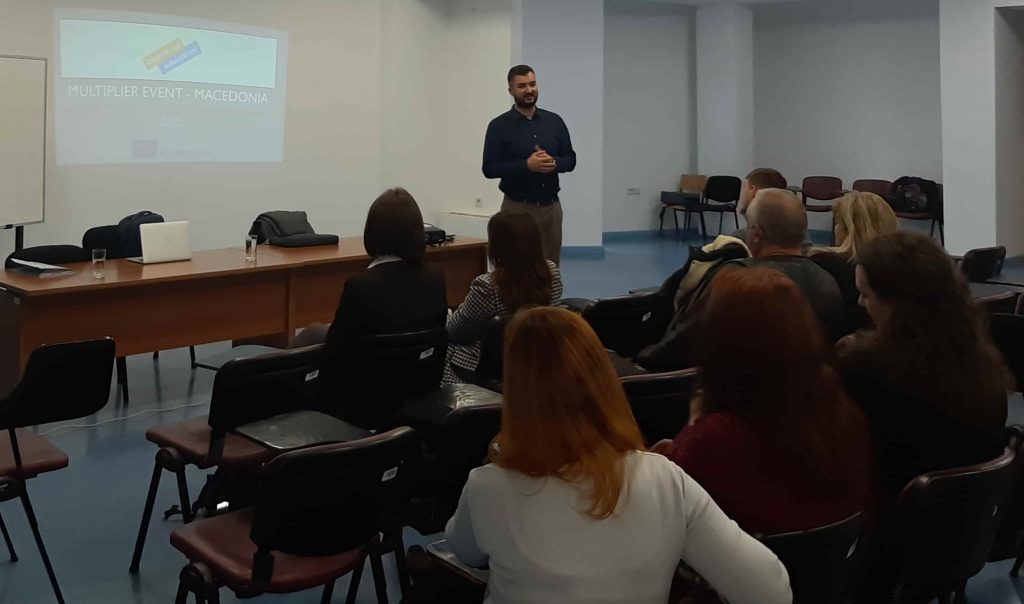
On 20 and 21st of December, 2019, in Bitola, two one-day events were held, with the title: “National Seminar about Adult Education for Experiential Learning and Tool Fair” by CEFE Macedonia, within the project “Experiential Pedagogy Of The Oppressed For Adults”, with a purpose to develop the skills of refugees and people with fewer opportunities, helping their social integration, as well as teaching them how to avoid or overcome conflicts through improved living conditions, supported by the “Turkish National Agency Erasmus Plus”, and coordinated by the Turkish organization “GAZIANTEP EGITIM VE GENCLIK DERNEG”, in a partnership with the organizations “CEFE Macedonia”, “EURO-NET – Italy”, “ASSOCIATION FOR EDUCATION AND DEVELOPMENT OF DISABLED PEOPLE – Greece”, and “BALKANSKA AGENCIYA ZA USTOYCHIVO RAZVITIE – Bulgaria”. The first event took place on 20 of December, at the premises of the Faculty for Information and Communication Technologies, in which the participants were representatives from educational institutions (professors and students), and the second event took place on December 21st, in the conference hall at “Hotel Milenium”, on which the participants were educators from the civil sector, as well as representatives from the business sector. The purpose of the two one-day events was to share useful tools and methods through a panel discussion and a promotion, i.e., introducing the participants with a manual (“Training Manual for Training of Adults”), containing concrete methodologies for experiential learning, which emerged as the final output of the whole project, under the mentorship of the project partners. The manual can be found at the following link: https://issuu.com/cefemacedonia/docs/manual-for-adult-educators_interactive_

Општо

How to get better trainers through NLP techniques

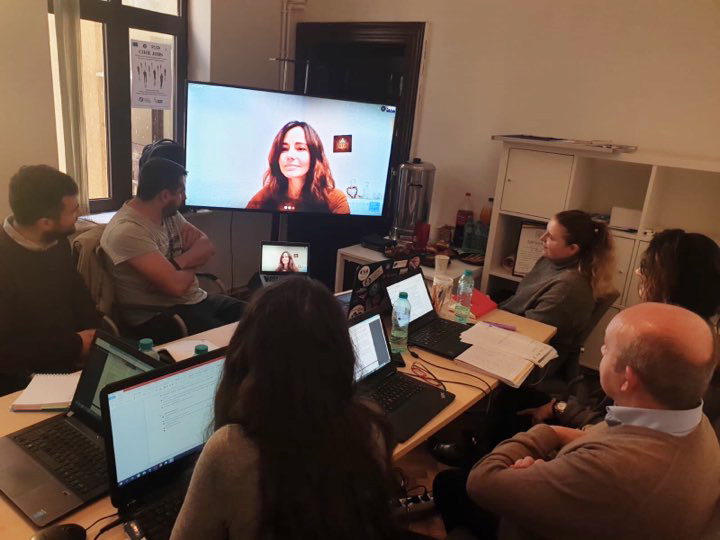
CEFE Macedonia has launched a strategic project to create and improve the competences of trainers in Macedonia, Germany, Romania and Italy. The purpose and focus of this partnership will be to research and create materials for a specific part of non-verbal communication – facial expressions. Why? Because only this part of our body has remained unchanged in human evolution influenced by culture, social environment and geographical position. What will we deliver in the next two years? A book called “Mimika”, as well as software for recognizing and learning facial expressions with the help of fast-moving technology – augmented reality. The benefits of these products are improved training skills and confidence in formal and non-formal education. Project partners are: – Training and consulting center “Trainifique Romania” from Bucharest, Romania, – Consortium of experts, trainers and consultants “InforElea Italy” from Turin, Italy, – Solaris VET Center from Leipzig, Germany and – CEFE Macedonia, as an organization that is a network of trainers and consultants for experiential learning around the world. We will be collaborating with academics, trainers and NLP experts from December 2019 to December 2021 thanks to the Erasmus + program of the European Commission and the Romanian National Agency for Mobility and Education. Do you think you can contribute to this extraordinary project, or do you want to upgrade your competencies? Email us at info@cefe.mk

Општо

Beyond Silicon Valley Online Entrepreneurship Course

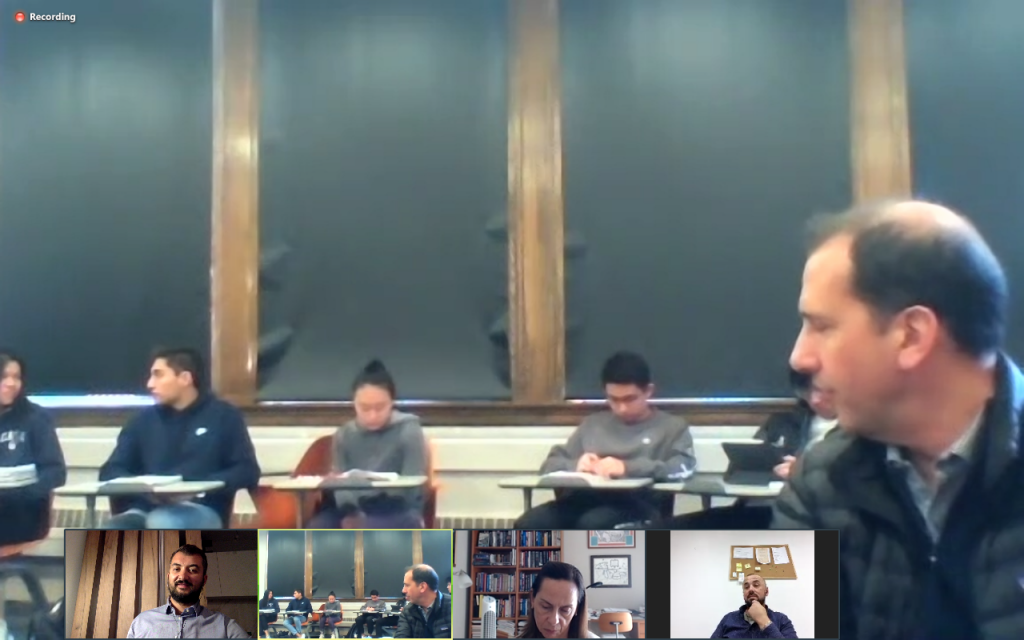
On 23.10.2019, Case Western Reserve University (CWRU) Professor Michael Goldberg hosted a ZOOM seminar with the students from the University and guest speakers from around the world: Mr. Fatos Axhemi, from Jakova Innovation Center in Kosovo, Mr. Jovan Stalevski from CEFE Macedonia and Mrs. Casilda, expat entrepreneur from Venezuela to USA. The joint class of guest speakers and CWRU students focused on how the war/political crisis is impacting economies and entrepreneurs and making recommendations how the Venezuelan entrepreneurial ecosystem could more effectively provide support to startups post-crisis. Previous this seminar, students from CWRU, made interviews with 14 Venezuelan entrepreneurs on how it is to functioning as a business or entrepreneurs in the moment of crisis.   Professor Goldberg organized a cohort in 2018 of Syrians to take Beyond Silicon Valley alongside a group of his CWRU students. The joint class of Syrian and CWRU students nurtured recommendations to the United Nations Development Program (UNDP) on how the entrepreneurs can be supported in post war areas, and you can see a short video on the collaboration here. In this semester and fall 2018, CEFE Macedonia’s experience in building and strengthening entrepreneurial ecosystem in the country was discussed and taken as an example as a role of an NGO what is doing to support economic development. The videos that serves as a documenting and informing about the support of Macedonian entrepreneurs you can watch here. Also the book that promotes the CEFE Macedonia’s role in the Macedonian ecosystem can be accessed and downloaded here. Professor Goldberg launched Beyond Silicon Valley on Coursera in April 2014 and it has attracted over 175,000 students from 190 countries over the past 5 years. Beyond Silicon Valley has been translated into 16 languages (most on Coursera platform) including Spanish. More of this seminars and live discussions will take place on selected Mondays and Wednesdays from 12:45-2 pm Caracas time during the CWRU fall semester which runs from the end of August until the beginning of December. Sessions will be recorded for students that are not able to attend the live discussions.