Општо

Општо

How to overcome fear, aggression, envy and greed in order to succeed in the entrepreneurial world?

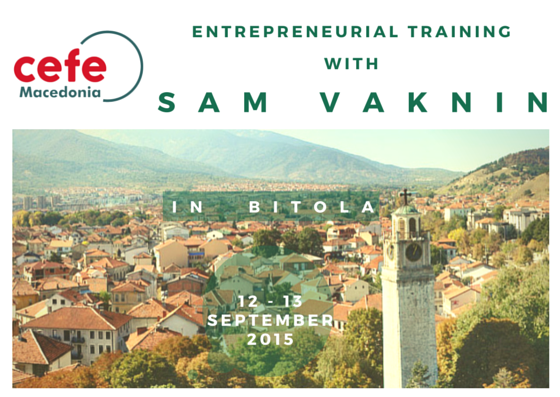
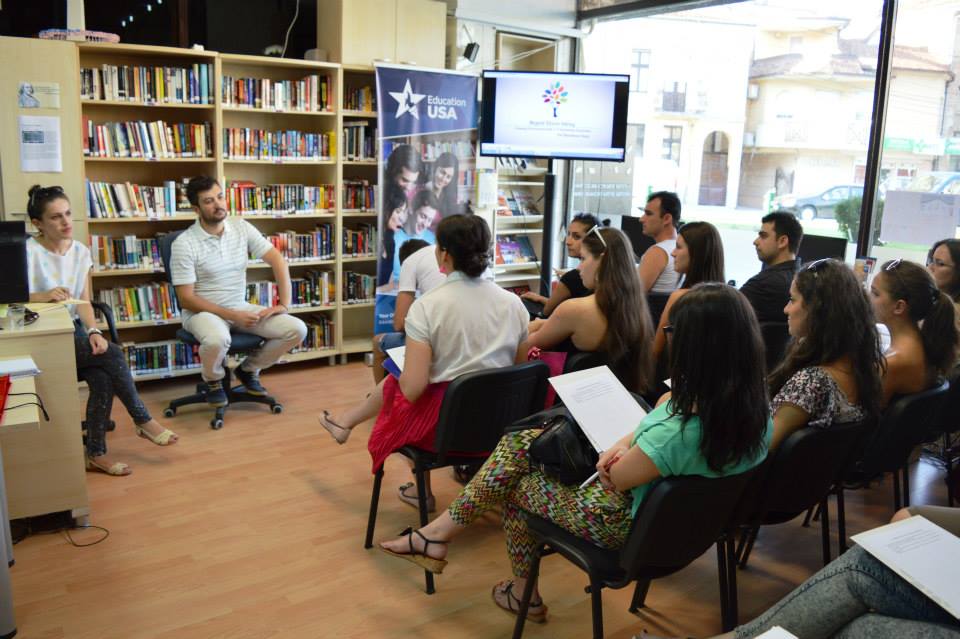
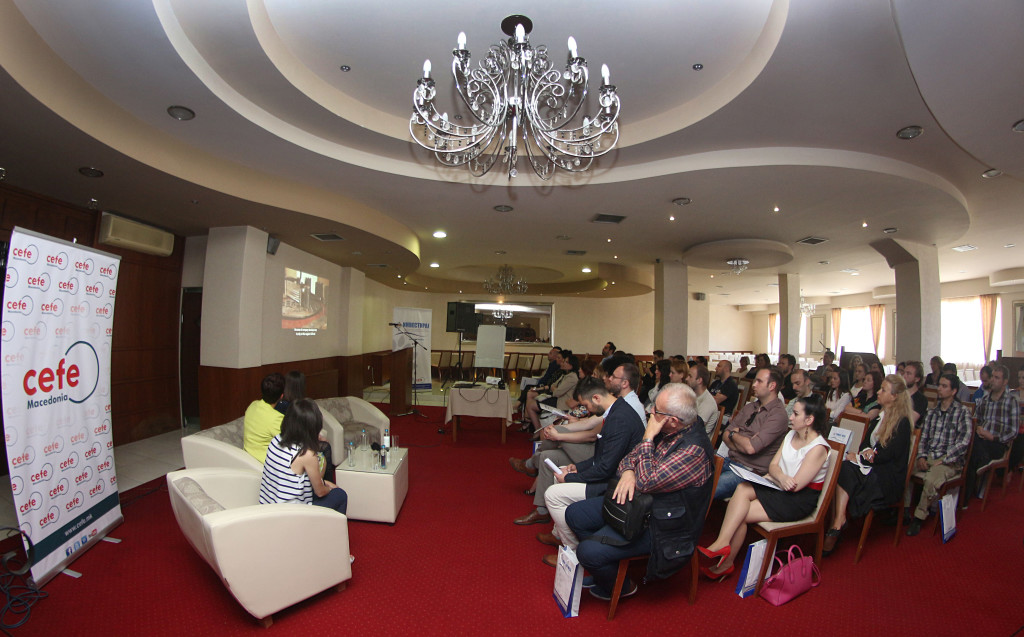
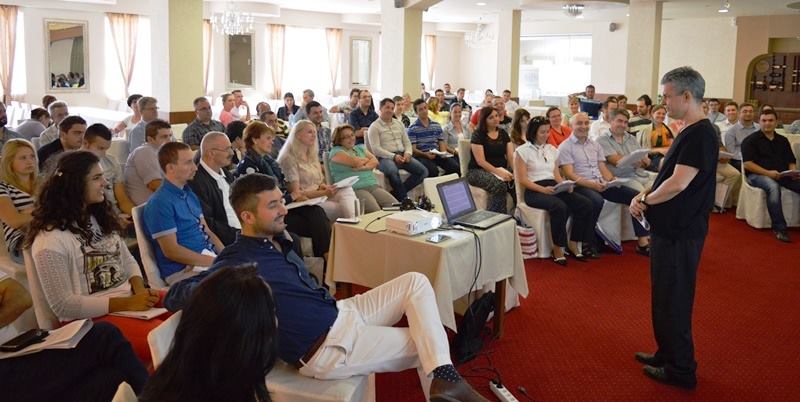
On 12th and 13th of September 2015 in hotel Kapri, Bitola, a unique training was held concerning the psychological aspect of entrepreneurship. The training was organized by the association CEFE Macedonia, and there were more than 90 attendees among which entrepreneurs, students, network marketers and employees from different organizations from all over Macedonia. The modules which were elaborated were based on the emotional intelligence in entrepreneurship, more precisely, negative emotions (fear, greed, aggression and envy) as obstacle for entrepreneurial success. Benefits which the participants are going to carry away with them after the training are: recognition of negative emotions which stand on the way to success of an entrepreneur, tools for their management and how can they incorporate them in their day-to-day work. All of the participants and organizers had the honor of collaborating with the trainer, Mr. Sam Vaknin – World expert in the field of clinical psychology, author of numerous world bestsellers on the mentioned subject (among which “Malignant Self-love: Narcissism Revisited”), business consulting as well as economy analytic and critic. Guest speaker of the training was Mr. Zoran Vitanov, one of the founding members of CEFE Macedonia and culprit for the success stories of hundreds of business from Amsterdam to Dubai. This is one of the subjects which is least represented and most scantily disseminated in the scope of non-formal education (seminars, trainings, workshops). Most formal and non-formal educations alike put the accent on skills and competences needed to run a business, but only a low percent tackle the basis of those business – the entrepreneur and his psychological preparedness for success (or failure).   In the media: http://tera.mk/strav-zavist-agresija-i-alchnost-emitivni-prechki-kaj-pretpriemachot/ Photo gallery: http://on.fb.me/1icfJJn
Општо

Creating new online mentors for European Voluntary Service

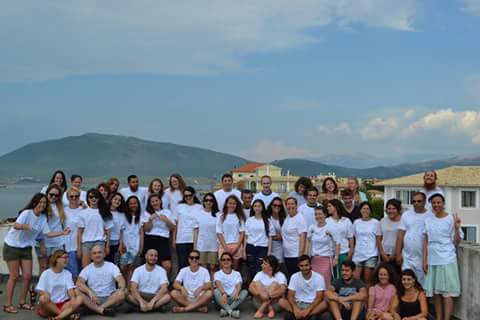
Three participants from Macedonia (Sanja Tonevska, Drazen Kotevski and Aleksandar Alabakovski) participated in the project to create an online platform that will train EVS volunteers (European Voluntary Service), and participants become the first e-mentors  of EVS. The project includes representatives from 11 countries: Greece, Romania, France, Macedonia, Bulgaria, Spain, Poland, Georgia, Tunisia, Ukraine and Armenia. The project ran from June 10 to 20 in Lefkada, Greece, it continued with a training in Romania (August 10-20) and will have its finish on the final event in October, in Lefkada, Greece. The project is funded by Erasmus +, and its purpose was to create online courses for future volunteers. The courses are divided into 10 different topics, according to the needs and preferences of potential volunteers. The aim of the courses is young people who wish to volunteer in one of the member countries of the EVS, to gain information and knowledge about the activities. For example, a course titled “Working with people with disabilities” includes information about different types of disabilities (physical, mental, blind, and deaf, etc.). There are also a variety of exercises and questions that potential volunteers need to respond and to obtain a certificate for successful completion of the training.  At the same principle is created and the remaining 9 courses which include work with the elderly, intercultural cooperation, EVS and career , etc. The second part of the project that includes the testing and evaluation of the courses was held in Romania from 10 to 20 August. Final preparations before the final commissioning in October are under preparations also in Lefkada. The project offers many benefits for everyone involved. On the one hand, there are participants who had the opportunity to learn about different cultures and of course to give their maximum contribution, each in their vocational area. On the other, there are the current and future volunteers. These are young people who often go to unknown countries and everything is new for them,- language, culture, habits, and further need to work with a certain population, so these information are of tremendously Importance. And certainly, the third part are the partner organizations, among them and CEFE Macedonia, which has strength capacities to answer the needs of the European Voluntary Service.

Општо

Project VI

Four participants from Macedonia attended the training course Project VI in Swindon, United Kingdom in the period August 17-23. The aim of the training course was to increase the opportunities available for blind and visually impaired young people in the realm of international non-formal education projects. The training was financed by Erasmus+, and was organized by Act Global, a non-profit organisation that offers training, volunteering & cultural exchanges, in partnership with Victa, organization that helps blind and partially sighted children in the UK. The training was attended by a group of 30 people from five countries: United Kingdom, Poland, Romania, Greece and Macedonia, and CEFE was the partnering organization that provided logistical support for participants from Macedonia.   Project VI was one of a kind experience that helped participants to improve their competencies for working with visually impaired and disabled young people, to learn how to address the needs of visually impaired and disabled people, and how to include  visually impaired youth in ongoing or future activities. Furthermore, this training was an excellent opportunity for inter-cultural awareness and experience exchange among participants from the five countries. During the training course, a Family Weekend was organized for 60 families with blind or partially sighted children. This was an opportunity for participants to get involved and in a range of activities with visually impaired children and their families. Most of the activities were outdoor adventures and sports, such as raft building, quad biking, giant swings, zip wires and many more. Voluntering their time, selfless devotion and skills, training participants interacted with visually impaired children and their families, and assisted them through the various activities. And, above all, this experience was a stimuli for training participants to become advocates for inclusion work with blind and visually impaired young people, seeing the importance of creating equal opportunities for VI children to reach their full potential and lead a happy and healthy life.

Општо

How to overcome the psychological barriers to entrepreneurial success?

We invite you to a training that will explore negative emotions as an obstacle to the success of entrepreneurs. This is a topic that is sparsely represented and poorly disseminated within non-formal modes of education (seminars, workshops). Most formal and informal settings emphasize the skills and competencies needed to conduct business, but a very small percentage is devoted to the foundation of these businesses: the entrepreneur and his psychological preparedness for success (or failure). The main goal of this event is to educate you and give you the knowledge and skills to: – Recognize the negative emotions that hinder the success of entrepreneurs; – Provide you with tools for their management; and – Teach you how to apply those tools in day-to-day operations. The training is designed to be implemented in two days, comprising four sessions, each composed of a lecture, a questions and answers round, and exercises for the practical application of the tools learned. The topics of the four sessions are: Fear Greed Envy Aggression Who are Your trainers? Sam Vaknin – An expert in the field of clinical psychology (personality disorders) in the workplace. He is the author of several bestsellers in the field (including “Malignant Self-love: Narcissism Revisited”), a business consultant, and an economic analyst and commentator. Zoran Vitanov – Guest speaker. One of the founders of CEFE Macedonia, responsible for the success of hundreds of entrepreneurs from Amsterdam to Dubai. When? September 12th and 13th 2015 (Saturday and Sunday) from 10:00 am to 17:30 pm Where? Hotel Kapri – Bitola What do I get further? – Anyone who successfully completes the training (with an active presence of at least 80% of the time) will be awarded a certificate issued by CEFE Macedonia, signed by the trainers; – Materials in print and electronic form; – A list of contacts for your future networking and cooperation; –  SPECIAL GIFT – All participants will receive 40 electronic books (e-books) by Sam Vaknin, which you can use in your continuing personal and professional development; Important: The training will be conducted in English. No translation will be available. What I need to invest to get all of this? The actual cost for this type of training is more than 9,000 denars per participant. Dr. Sam Vaknin and Mr. Zoran Vitanov are contributing the entire workshop at no charge. The training is, therefore, available only for the fixed costs of 770 denars per participant!!! How to apply? Registration (please feel the electronic application), and proof of participation shall be conducted until 1st September 2015. Contacts of the event organizer, CEFE Macedonia are: 078/437267 Jovan Stalevski; 078/201854 Elena Gagacheva; info@cefe.mk We kindly ask you to confirm your presence by payment of 770 denars to the bank account below, latest until September 1st 2015. Bank account data: CEFE Macedonia NLB Tutunska Banka AD Skopje Bank account number:  210 063 771 060 147 Address: CEFE Macedonia „Nikola Parapunov“ 33/57, 1000 Skopje Republic of Macedonia Payment purpose: Training Sam Vaknin * The cost of training is per participant, in a group of 60 people. CEFE Macedonia reserves the right to delay and combining terms in case of insufficient registered participants. In case of more applicants CEFE Macedonia applying the principle “first come – first served”. In the policy of working CEFE Macedonia have no exceptions to the payment of participation fee if the person lacks a part of the training or the person is representative of citizens association.

Општо

Growing Entrepreneurship in Transitioning Economies – Macedonian Story

The name of this article actually is an online course which is running at American Corner – Bitola from July 23rd – August 17th 2015. This course is free of charge and open to everyone, and will include a series of interesting video interviews and discussions with entrepreneurs from different parts of the country, founders, and business experts. Viewers will get simple, practical advice and information on how to start a business and identify funding sources in a tough economic environment. At the end of each video we will discuss and present information from the experience of facilitators Stalevski John and Elena Stojanovska, with a group of participants. You will learn through writing essays and quizzes on the topics of the course. You will learn about the origins and the culture of entrepreneurship for this region, you will see as in past years, how through state funds were created and implemented major programs to support and create jobs through self-employment and counseling. Will meet entrepreneurs who risked and failed to take resources from those funds and have developed their businesses, and now sharing that experience with you. You will acquaint companies from information technology to agriculture sector who face the same challenges and successes that made Macedonian and world brands. Furthermore many professionals in the field of entrepreneurship will share their experience and advice for future entrepreneurs through stories from their professional and real life. For all interested people who want to take part in the course please contact the facilitators: Jovan Stalevski j.stalevski@cefe.mk or Elena Stojanovska elenafamis@gmail.com The content of the course is available here http://bit.ly/BSVonlinecourse. [Best_Wordpress_Gallery id=”2″ gal_title=”Makedonskata-prikazna”]

Општо

Conclusions and recommendations from the unique conference: “Strengthening the entrepreneurial ecosystem in Macedonia” (Educational, public and private sector together for the future of entrepreneurship)

Economic actors and policy makers in Macedonia seek solutions to create new jobs and stimulate economic growth. So today there is a need of new and innovative companies, but many challenges still stand in their design and development. Through this conference our aim was to contribute to: – Identification of current and future actors in the entrepreneurial ecosystem, – Highlighting some of the barriers to the creation and development of new companies, and how to solve them, – Identifying steps that policymakers can take further to develop the entrepreneurial ecosystem in the country, – Finding innovative ideas for collaboration between actors in the system, thus resulting in high-growth entrepreneurship. Our guests were: students, employees, unemployed, potential and existing entrepreneurs, representatives of institutions that support entrepreneurship, financial institutions, NGOs, public institutions policy, leaders and representatives of business incubators and accelerators, business angels, banks, etc. Program  Session 1: Key actors in Macedonian entrepreneurial ecosystem The fact is that entrepreneurship is developing in an environment where there is functional entrepreneurial eco-system composed of: mix of startup companies, large companies, universities, financial funds, strong institutions, research centers and market. Certainly the increased interest in “entrepreneurial ecosystem” occurs in many countries and regions around the world, because everyone wants to create something like Silicon Valley. General questions for discussion Session 1: * What are the motives for the development of an entrepreneurial ecosystem? * What are the key players in the Macedonian entrepreneurial eco-system? * How do we differ from other regions in the world – speaker’s experiences. Parallel Session 1.1: Key actors in Macedonian entrepreneurial ecosystem * The role of business accelerators and business angels for development and support of entrepreneurship in Macedonia * The role of philanthropy in support of entrepreneurship * Where are we and where do we need improvement? Speakers: Jovan Madzovski – Regional Director of CEED Macedonia, Albania, Bosnia and Herzegovina, Moldova and Serbia Nikica Kusinikova – Executive Director of the Association for promotion and encouraging corporate social responsibility “Konekt” Moderator: Natasha Alabakovska Parallel Session 1.2: Key actors in the Macedonian entrepreneurial ecosystem At the beginning of this session the moderator Prof. Mimoza Bogdanoska Jovanovska introduced the topic of the session and speakers: * How do the universities motivate students to think in entrepreneurial way? * How the intermediary organizations develop entrepreneurship (business centers, business incubators, technology parks, financial institutions, etc.). * Where are we and what needs to be improved – from the aspect of creation of new enterprises? * What type of actions are needed to improve the ecosystem? Speakers: Konstantin Petkovski  – Professor at the Technical Faculty in Bitola Violeta Nikolova  – MBA, Director of the Center for Women Entrepreneurs Skopje Peter Kotevski – Representative of the business sector – owner of the company for production of video games “Kamaj Media” – Bitola Session 2: Policies to promote and strengthen the entrepreneurial ecosystem in the country Policies and laws play a major role in developing the entrepreneurial ecosystem and cooperation between the actors. But we need evidence to see which approaches, programs and policies are effective and produce results. In this session, those involved in policy-making shared their experiences, views and practices. General questions for discussion Session 2: * Fresh example of policies that have encouraged the development of entrepreneurship in Macedonia * What do the state institutions do to encourage entrepreneurship? * Examples of policies that have been effective or ineffective * Which of the proposed ideas and policies could be adopted by Parliament and how they would be the most efficiently implemented? * What policies or incentives may be most effective in cooperation between the startups with state institutions and large companies? Speakers: Jeshim Sejfulovska  – Head of Employment State Agency-branch Bitola Jasmina Popovska  – Director of the Fund for Innovations and Technological Development Violeta Nalevska  – Head of Department for Local Economic Development, Municipality of Bitola Zoran Vitanov – co-owner of Trade Consulting LLC and co-founder of “CEFE Macedonia” Conference materials (downloads): * Final conclusions and recommendations for development of entrepreneurial ecosystem in Macedonia * Event Agenda * Conference speakers Bio’s * Final presentation of the results from the project “Why to go abroad when you can stay and invest in your country” * Onepager project results Media * Press clipping (TV Orbis, Dnevnik) * Photos – CEFE Macedonia Facebook fan page Practical information: * Time and date: 19.06.2015 (11:00 – 15:30) * Venue: Hotel Kapri – Bitola * Contact: Jovan Stalevski, Project Manager j.stalevski@cefe.mk