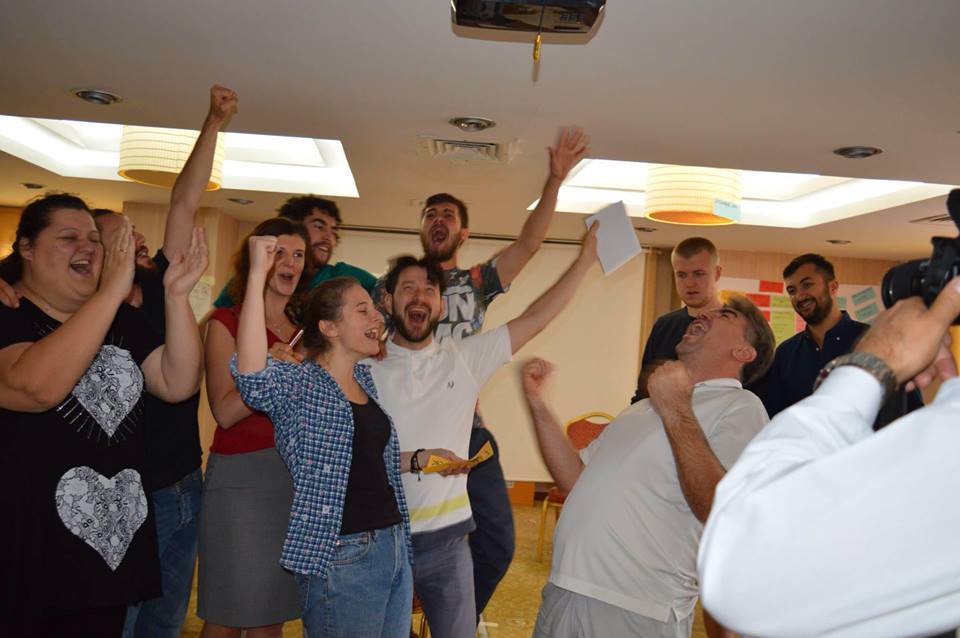
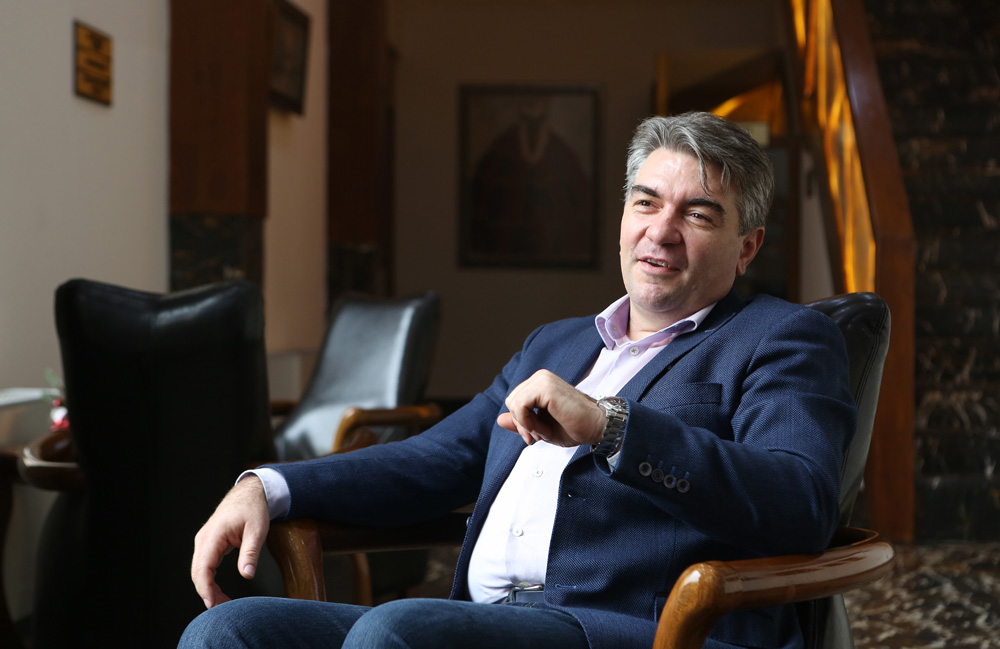
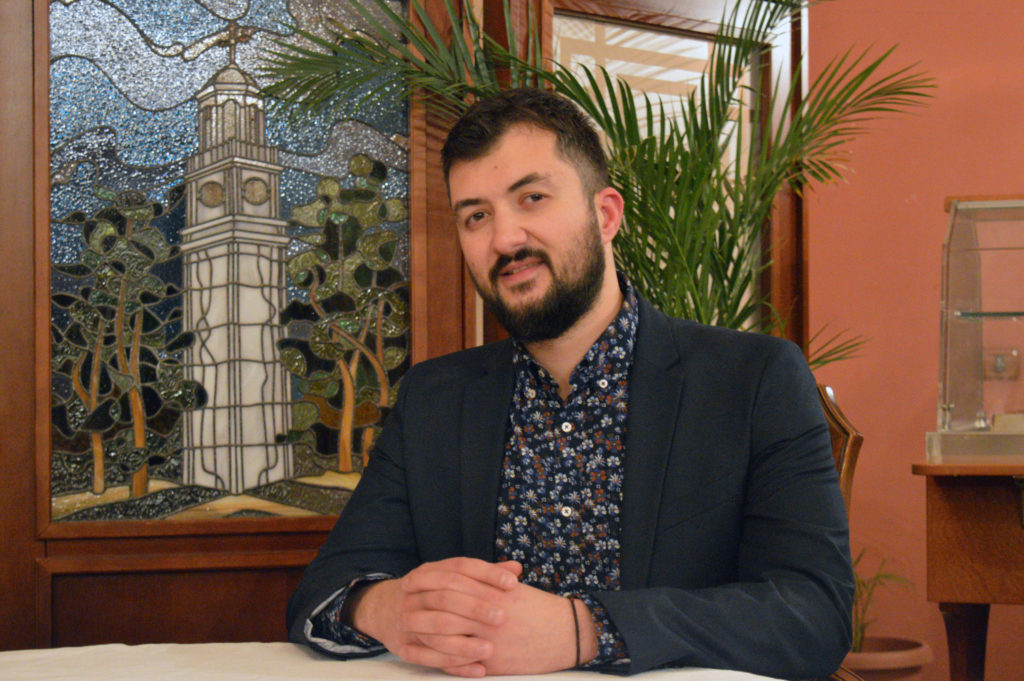
Jovan Stalevski is the President of the organization “CEFE Macedonia” and he is an international CEFE trainer. The organization works hard and persistently in Macedonia to promote the entrepreneurial culture; it trains, directs and encourages the youth teaching them that the decision for starting their own business is more than just a business decision. It is a decision to be a free man! – (Interviewer – Verica Jordanova) At the beginning, give us a short introduction about CEFE Macedonia, tell us how long it exists, what it does and what the main mission of this organization is. CEFE is a methodology for experiential training of entrepreneurs. The acronym CEFE comes from the English name of the methodology “Competency based Economies, Formation of Enterprise”. It means that the success of an enterprise does not depend solely on the idea and the market, but it mostly depends on the entrepreneur and their competencies. For example, if we take one of the local businesses and put someone else in the owner’s place, the business will not be the same. The methodology was created in the mid-80s of the 20th century by experts in the areas of psychology, business, marketing, finance and sociology. The German Ministry of Economy and their programs for international development promote this method in over 150 countries. Due to the quality and efficiency, today, CEFE is a widely accepted training method for entrepreneurs not only in Macedonia, but also across the world. – What has this method shown in the last 30 years? 95 % of the people who take part in the trainings ask for additional training or they insist that someone from their family or associates visit CEFE trainings. This is the case for Macedonian trainers and also the trainings that take place everywhere in the world. Macedonia was introduced to the method in 1997. 11 years later, in 2008, the civic association “CEFE Macedonia” was founded. The main mission of CEFE Macedonia is promotion of entrepreneurial culture and building business competencies of economic actors in the society. We teach people how to be entrepreneurs and leave the emotions out of the business and rely on real research and market evaluation. One of our participants said: you taught me not to walk on rotten planks, but instead to be firm and confident in my steps towards success. We believe that we can raise the level of entrepreneurial culture and employability in Macedonia through training of as many people as possible. No one in the world has become successful on their own; therefore we invite everyone believing in this vision to contact us at info@cefe.mk for collaboration. Our collaborators are the institutions that support entrepreneurship, such as employment agencies, the Fund for Innovation and Technological Development, ministries, faculties, universities, institutes, municipalities, accelerator programs, business incubators, business start-up centers, financial institutions, NGOs, as well as individuals (businessmen, visionaries, experts) who want to make a positive change in Macedonia. – You are saying that your vision is to form entrepreneurial culture in Macedonia and to increase employment of the population. How would you rate the entrepreneurial culture in Macedonia? How do entrepreneurial trends change over the years? The entrepreneurial culture in Macedonia is still developing, and the problem is in the system in which our youth is growing up. The conventional system of education prepares us for the already existing jobs (created in the 20th century) and it does not teach us how to create new value, with an urge to fix things around us and to be responsible for our future and actions. Additionally, the political and social crises contribute to the state of fear and non-initiation among the people in Macedonia. People cannot predict and assess the opportunities and risks; therefore they refrain from additional investments and starting something new. Another symptom of our mentality that hinders entrepreneurial actions is the habit of waiting for someone else to provide and do our job. That is a leftover from the past handed over to us by our parents who lived in a different economic system. A more concerning thing is that this approach has been accepted by the political and educational leaders. I am confident to say that there is no better time for entrepreneurial actions than the time that we live in. Why? The Internet has made all information easily accessible, travelling and networking opportunities are cheap and available and a lot of raw materials and technologies for the development of ideas are cheap and available. Learning resources are more available than ever before. We have all the information we need by using a smart phone and an Internet connection and we are connected to all potential clients. There are a lot of microcosms – niche markets in which your business can operate. – Recently, there have been several programs that stimulate people, especially young people to have a try at their own businesses. Taking into consideration your experience, what do you think about the key challenges that deter them from the idea to start business, and on the other hand, what are the key motivating factors to get into such mission? It is true that in Macedonia and the region there are many programs that support and help young people start or develop their business. The support is offered on all levels of development: from idea to business, startup support, support in the intermediate stage as well as support for expansion of companies and internationalization. We mapped the ecosystem and we documented it in an online course which can be found at www.cefe.mk/Investiraj. A major demotivating factor in the region is the domestic upbringing, the influence of the closest friends and the traditional collectivist system of values which favors safety in contrast to contemporary societies which favor taking risks and success. On the other hand, the media in Macedonia and the world feed our fear which is the essential reason to be afraid and to operate only in our comfort zone (read steady job). However, world trends