Општо

Општо

Entrepreneurial learning for youth

Promotional event for the “Entrepreneurial learning for youth” project supported by @Erasmus+ with the action for strategic partnership and creating innovations. The goal of the event was to familiarize the audience for the opportunities which the Erasmus+ program offers, the benefits that the youth with economical problems could get, and, of course, a presentation of the whole project, it’s activities, and products. Many thanks to the visitors of the event. Thanks to your proactivity, 3 hours worth of presentations felt just as 5 minutes. It’s a pleasure to inform the young people who want to join the academy to register: http://bit.ly/biz-aka-cefe-ka2 Also we would like to say thanks to: Kristijan Kostovski,  Natalija Nikolova,  Atanas Palanov,  Jovan Stalevski, Hristijan Kocankovski without them this event wouldn’t be possible. Also we are very grateful to the EU Info Center, ValosoHub, Law Office Maja Ristova, Managers Association of Macedonia, www. inovativnost.mk and to all the media who helped spread this information. http://www.mrt.com.mk/node/39437 http://play.mrt.com.mk/play/6862 http://www.inovativnost.mk/mladi-pretpriemaci-od-makedonij…/ http://kanal5.com.mk/vesti_detail.asp?ID=120473 http://faktor.mk/-press-release–startuva-akademija-za-pret… http://tvnova.mk/…/pretpriemnichko-uchenje-za-mladi-za-nam…/ http://vecer.mk/…/pretpriemnichko-uchenje-za-mladi-za-namal… http://www.biznisvesti.mk/startuva-akademija-za-pretpriemn…/ http://a1on.mk/archives/720207 http://bi.mk/startuva-akademija-za-pretpriemnishtvo-za-mla…/ http://reporter.mk/…/%D0%BF%D1%80%D0%B5%D1%82%D0%BF%D1%80%…/ http://sitel.com.mk/pretpriemnichko-uchenje-za-mladi-za-nam… http://skopjeinfo.mk/pretpriemnichko-uchenje-za-mladi-za-na… http://www.mia.mk/mk/Inside/RenderSingleNews/385/133628134 http://kapital.mk/startuva-akademija-za-pretpriemnishtvo-z…/

Општо

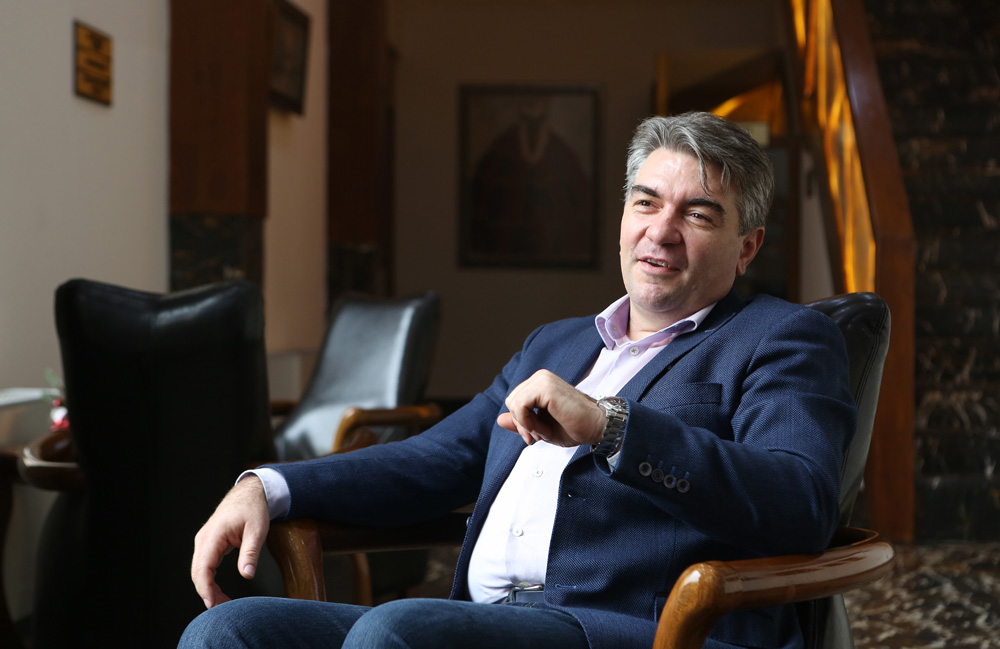
Zoran Vitanov: Entrepreneurship is the Future!

At the beginning of 2017, the business magazine “Economy and Business” made a mega interview with the person who is among the most meritorious for bringing and successfully cultivating the CEFE Methodology in Macedonia. Zoran Vitanov is a founding member of CEFE Macedonia. In this article, we transfer part of the interview where they talk about CEFE Macedonia and CEFE methodology. To read the full interview, and we believe that you do not want to skip it, click on the official website of Economy and Business.

Општо

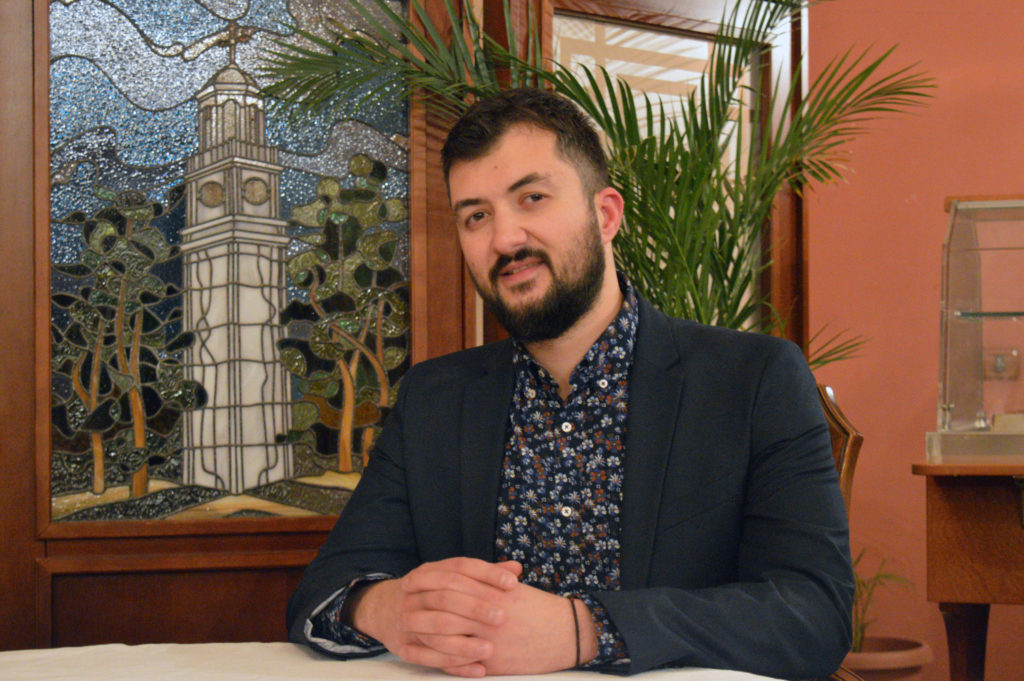
Jovan Stalevski: There is no better time for your own business than the time that we live in!

Jovan Stalevski is the President of the organization “CEFE Macedonia” and he is an international CEFE trainer. The organization works hard and persistently in Macedonia to promote the entrepreneurial culture; it trains, directs and encourages the youth teaching them that the decision for starting their own business is more than just a business decision. It is a decision to be a free man! – (Interviewer – Verica Jordanova) At the beginning, give us a short introduction about CEFE Macedonia, tell us how long it exists, what it does and what the main mission of this organization is. CEFE is a methodology for experiential training of entrepreneurs. The acronym CEFE comes from the English name of the methodology “Competency based Economies, Formation of Enterprise”. It means that the success of an enterprise does not depend solely on the idea and the market, but it mostly depends on the entrepreneur and their competencies. For example, if we take one of the local businesses and put someone else in the owner’s place, the business will not be the same. The methodology was created in the mid-80s of the 20th century by experts in the areas of psychology, business, marketing, finance and sociology. The German Ministry of Economy and their programs for international development promote this method in over 150 countries. Due to the quality and efficiency, today, CEFE is a widely accepted training method for entrepreneurs not only in Macedonia, but also across the world. – What has this method shown in the last 30 years? 95 % of the people who take part in the trainings ask for additional training or they insist that someone from their family or associates visit CEFE trainings. This is the case for Macedonian trainers and also the trainings that take place everywhere in the world. Macedonia was introduced to the method in 1997. 11 years later, in 2008, the civic association “CEFE Macedonia” was founded. The main mission of CEFE Macedonia is promotion of entrepreneurial culture and building business competencies of economic actors in the society. We teach people how to be entrepreneurs and leave the emotions out of the business and rely on real research and market evaluation. One of our participants said: you taught me not to walk on rotten planks, but instead to be firm and confident in my steps towards success. We believe that we can raise the level of entrepreneurial culture and employability in Macedonia through training of as many people as possible. No one in the world has become successful on their own; therefore we invite everyone believing in this vision to contact us at info@cefe.mk for collaboration. Our collaborators are the institutions that support entrepreneurship, such as employment agencies, the Fund for Innovation and Technological Development, ministries, faculties, universities, institutes, municipalities, accelerator programs, business incubators, business start-up centers, financial institutions, NGOs, as well as individuals (businessmen, visionaries, experts) who want to make a positive change in Macedonia. – You are saying that your vision is to form entrepreneurial culture in Macedonia and to increase employment of the population. How would you rate the entrepreneurial culture in Macedonia? How do entrepreneurial trends change over the years? The entrepreneurial culture in Macedonia is still developing, and the problem is in the system in which our youth is growing up. The conventional system of education prepares us for the already existing jobs (created in the 20th century) and it does not teach us how to create new value, with an urge to fix things around us and to be responsible for our future and actions. Additionally, the political and social crises contribute to the state of fear and non-initiation among the people in Macedonia. People cannot predict and assess the opportunities and risks; therefore they refrain from additional investments and starting something new. Another symptom of our mentality that hinders entrepreneurial actions is the habit of waiting for someone else to provide and do our job. That is a leftover from the past handed over to us by our parents who lived in a different economic system. A more concerning thing is that this approach has been accepted by the political and educational leaders. I am confident to say that there is no better time for entrepreneurial actions than the time that we live in. Why? The Internet has made all information easily accessible, travelling and networking opportunities are cheap and available and a lot of raw materials and technologies for the development of ideas are cheap and available. Learning resources are more available than ever before. We have all the information we need by using a smart phone and an Internet connection and we are connected to all potential clients. There are a lot of microcosms – niche markets in which your business can operate. – Recently, there have been several programs that stimulate people, especially young people to have a try at their own businesses. Taking into consideration your experience, what do you think about the key challenges that deter them from the idea to start business, and on the other hand, what are the key motivating factors to get into such mission? It is true that in Macedonia and the region there are many programs that support and help young people start or develop their business. The support is offered on all levels of development: from idea to business, startup support, support in the intermediate stage as well as support for expansion of companies and internationalization. We mapped the ecosystem and we documented it in an online course which can be found at www.cefe.mk/Investiraj. A major demotivating factor in the region is the domestic upbringing, the influence of the closest friends and the traditional collectivist system of values which favors safety in contrast to contemporary societies which favor taking risks and success. On the other hand, the media in Macedonia and the world feed our fear which is the essential reason to be afraid and to operate only in our comfort zone (read steady job). However, world trends

Општо

Apply for business academy

ASSOCIATION OF CITIZENS CEFE MACEDONIA SKOPJE and  CRYSTALCLEARSOFT ANONYMOS ETAIREIA PAROCHIS YPIRESION LOGISMIKOU are selecting 20 youth to participate in the project Entrepreneurial education for youth Project, funded by the European Union through Erasmus + Programme. The aim of the project: to develop a programme for entrepreneurship, who will work at European level, which will facilitate the personal and professional development of entrepreneurship competences of 60 youth from Romania, Macedonia and Greece. Participants profile: – 10 youths aged between 17-30 years old – 10 youths aged between 17-30 years old with fewer opportunities facing economical obstacle: young people with a low standard of living, low income, dependence on social welfare system; or in long-term unemployment or poverty; or young people who are homeless, young people in debt or with financial problems. Selection criteria –    To that have a job and want to become entrepreneur/ unemployed/ students (university or high-school). –    To be on the target group description/ profile –    The desire to personal and professional development –    To have intention to become entrepreneur –    To use the gained/ developed competences after the project through follow up –    The gender equality will be ensured. –    Respecting the principle of equal chances, there will be no discrimination based on religion, sex, origin, nationality, beliefs or values, sexual orientation, disability. Through this project the youths will develop their entrepreneurial competences. The project will create a space for the youth to met experts from the field of business, public and education to develop their business plans and ideas, and they will simulate opening a business. The project will offer material and business plans computer program, online open courses and business magazines to help the youth to develop their ideas. The youth will also have the chance to travel to Romania, Transylvania for 7 days, to learn and simulate an social business in a multicultural environment. The youth will get the chance to identify their aspirations and professional objectives, how they can became entrepreneur, and what are the entrepreneurship policy at local and European level and how to use this policy to become entrepreneur. They will understand what competences they need to develop to continue the professional and personal development and the benefits of being entrepreneur. In order to be selected the youth need to be involved in all the activities of the project: –    They will participate in  17 workshops during July – November 2017, each workshop will take a day (with an average of 3.4 days/ month) –    To participate in the youth mobility in Romania Transylvania in the beginning of December (7 days) –    To participate in 9 workshops during January – June 2018, each workshop will take a day (with an average of 2.17 days/ month) –    To participate in 4 workshops during July – September 2018, each workshop will take a day In order to apply to participate in this project please fill the application form or send us an e-mail: info@cefe.mk Application deadline 25.05.2017.

Општо

Start of FaBuSS – international project for family businesses

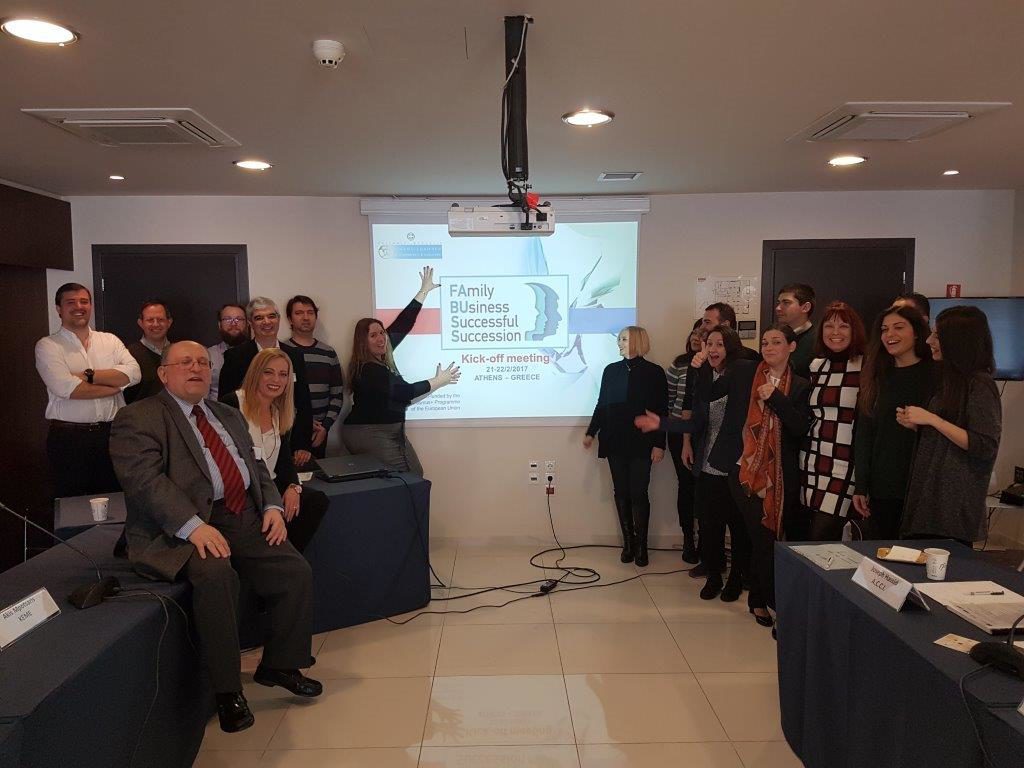
On 21 and 22 of February in Athens, representatives of CEFE Macedonia participated in the meeting to promote beginning of the project FABUSS – Successful succession in family businesses (FABUSS – Family Businesses’ Successful Succession). Target group of this project are young people between age of 18 and 35 who are willing to take over their Family Business at some point in the future. These aspiring successors need skills and knowledge to effectively develop the business by applying new innovative strategies, including extension of their markets, through networking and cooperation with similar enterprises in other countries. The project’s objectives are: 1. To Identify and highlight best practices for training and supporting next generation family business leaders 2. To equip next generation leaders with required knowledge, skills and networks – national and international 3. To strengthen next generation leaders’ knowledge and skills, by exposing them to transnational good practices, expertise and team work with target group members from other countries. 4. To support the longevity of family business, their renewal and internationalization in order to enforce their socio-economic contribution. According to the study of the 2015 “European Family Business Trends” 28% of surveyed companies plan to hand business management to the next generation, 20% to hand over ownership to the next generation and 15% to hand over the management of the company to the next generation. CEFE Macedonia, among other activities within the project, will be responsible for implementation training for trainers, in order to train the family members who are willing to be the next generation to take over their family business. Apart from CEFE Macedonia, the National Youth Council of Macedonia (NMSM) will also take part of this project. Other countries where the project will be implemented are Greece, Cyprus, Bulgaria, Italy, and Portugal. This project will last for two years and is financed by Erasmus + Programme of the European Union. The project is implemented by Athens Chamber of Commerce and Industry.

Општо

11. Dialogue between young people and policy makers

The large number of unemployed youth in the Republic of Macedonia has raised the possibility of self-employment, ie young people to become creators of jobs, not only claimants. But how much the youth are aware of the benefits of self-employment and running their own business? And what the local authorities do to use this advantage for strengthening of their own economies? CEFE Macedonia’s new project works to answer exactly to these questions and their deeper analysis to create a network of cooperation between youth and youth policy makers in the republic. The project was approved by the National Agency of Macedonia through Erasmus + KA3. Within this project will address the key questions on this topic, by preparing a survey among young people in the republic and local authorities. The results of the survey will be published in a study which will be a guideline for local authorities to the needs of young people and how to use to strengthen economic and business environment in the country. The main objective is to encourage dialogue between young people and local authorities, active involvement of young people in the labor market, entrepreneurial and business activities. To supplement youth policies at local and a regional level, and the development of local partnerships. To meet these targets several activities are defined: Research and study the behavior and opinions of young people in partnership with local authorities Study the best practices for support and promotion of youth entrepreneurship Analysis and dissemination of research results A two-day discussion on “The role of local authorities in supporting youth entrepreneurship as a leading tool for improving the business environment, economic development and employment.” It was made a report of the survey (target groups – young entrepreneurs and institutions), and the research was performed by Prof. Dr. Snezana Mojsovska Salamovska ‘Erasmus + project “Dialogue between young people and policy makers”, which is conducted by CEFE Macedonia survey was realized according to the following previously provided guidance and recommendations: The survey should be focused on two target groups: First group: Young people from 18-30 years. Among this group of respondents, the research should answer the following key questions: What is the habit among young people for starting of own business? Do they know the work of local governments and whether they would seek their help in developing their business? Do they have information on a particular measure or policy of the local government to promote entrepreneurship? Second group: Local authorities and policy makers planned minimum of 60 respondents. Among this group of respondents, the research should answer the following key questions: Do they have developed targeted strategic documents, policies and measures to promote and support youth entrepreneurship? Do they have an established network of cooperation and development of local potential to stimulate the creation of businesses, exchanging information and scientific knowledge and innovation? Under the agreement, data collection was carried out using the testing method previously designed questionnaires intended for testing electronically, but with the ability to be used also in conventional way for the realization of a personal interview with certain respondents that from objective reasons are not able to answer the questionnaire electronically. Thus, in the first phase of the research, they were initially designed structured questionnaires provided for both groups of respondents, as follows: Questionnaire for young entrepreneurs (Addition no. 1) Questionnaire for institutions and policy makers (Addition no. 2) The questionnaires were developed and implemented in electronic and printed form. Most respondents were interviewed electronically, through e-mail, by placing the questionnaire on social networks and so on. Data processing was performed by using cloud applications, and analysis and interpretation of results is presented in subsequent sections of this report, for each target group individually, and of course eventually presented comparative summary and conclusions. Within the project “Dialogue between young people and policy-makers”, funded by the National Agency for European educational programs and mobility on 27-28.10.2016 in Hotel Epinal, Bitola was realised a two-day conference on “The Role local authorities in support of youth entrepreneurship as a tool for economic development and employment. ” Conclusions summarizes Prof. Dr. Monica Markovska The main aim of the conference was to improve dialogue, communication and cooperation between local authorities and public sector and young people aimed at finding concrete and effective solutions support youth entrepreneurship. The conference took place within two days, with all-day activities. It was structured in: opening the conference, presentation of the results of the survey, five panel – discussions, closing and evaluation of the conference. Each panel included speakers, panelists, representatives of public, private and non-profit sector where representatives were different experiences, opportunities, ways of employment, policies, measures and efforts relating to youth entrepreneurship. Within each panel has developed a productive discussion which provided information and any documents informing young people increase young people’s interest in entrepreneurship, challenges, benefits and risks of the same. The panels (1,2,3) included guests – panelists, representatives of NGOs (CEFFE, Open the window, LEAD, Volvox) Technology Park – Tetovo University “Ss. Kliment Ohridski in Bitola (Faculty of Technical Sciences, Faculty of Information and Communication Technology), Business Academy Smilevski Employment Agency of the Republic Macedonia, Agency for promotion and development of agriculture. The panels (4,5) aimed at small group for drafting and presentation of concrete proposals for recommendations, policies and measures aimed at improving the dialogue between young people and the public sector.